
That smell. It’s one of the most distinct and, for many, oddly satisfying scents: the “new car smell.” It’s a complex bouquet of plastic, vinyl, and adhesives that signals freshness and a new beginning. We find its cousin in a freshly painted room, a new piece of furniture, or a brand-new pair of sneakers. We breathe it in deeply, associating the chemical odor with newness and cleanliness. But what if that satisfying scent is a warning sign? What if the very air we are happily inhaling is filled with a cocktail of invisible chemicals?
According to the U.S. Environmental Protection Agency (EPA), the concentration of these chemicals indoors is often two to five times higher than outdoors. We spend about 90% of our time inside, breathing air that is potentially far more polluted than we imagine. The story of that “new smell” is the story of Total Volatile Organic Compounds, or TVOCs, and it’s time we understood what we’re really breathing.

The Chemical Soup: What Exactly Are TVOCs?
Let’s break down the term. Volatile means these compounds easily evaporate and turn into gas at room temperature. Organic means they are carbon-based chemicals. And Total is the key part—TVOC is not a single chemical but a catch-all term for a wide range of hundreds, sometimes thousands, of different VOCs present in the air at the same time.
Think of it like a “chemical soup.” You can measure the total volume of soup in the bowl, but you might not know every single ingredient that went into it. Formaldehyde (HCHO) is one well-known VOC, but it’s just one ingredient. The TVOC measurement gives you a broader picture of the overall chemical load in your air. This is crucial because the danger often lies not just in one single, high-concentration chemical, but in the combined effect of many different ones.
The Everyday Sources: Where Is This Soup Brewed?
The reason indoor TVOC levels are so high is that our modern homes are filled with products that constantly release—or “off-gas”—these compounds. The sources are extensive and often surprising:
- Building Materials & Furnishings: This is the biggest category. Engineered wood products (particleboard, MDF), insulation, paints, varnishes, caulks, and adhesives are major emitters. That new sofa, mattress, or carpet is likely off-gassing chemicals for weeks, months, or even years.
- Household & Personal Care Products: Aerosol sprays, air fresheners, cleaning agents, disinfectants, cosmetics, and even scented candles release a burst of VOCs into the air with every use. That “pine forest” or “ocean breeze” scent is often a complex mixture of synthetic chemicals.
- Activities: Cooking, especially frying or broiling, can release VOCs. Hobbies involving glues, paints, or solvents are also significant sources. Even dry-cleaned clothing can bring VOCs into your home.
The Invisible Danger: Health Risks and the “Cocktail Effect”
Our bodies are resilient, but constant exposure to this chemical soup can take a toll. The health effects of TVOCs can be categorized into short-term and long-term.
Short-term effects often include eye, nose, and throat irritation, headaches, dizziness, nausea, and worsening of asthma symptoms. These are often vague symptoms that we might dismiss as fatigue or allergies, but they can be your body’s early warning system for poor air quality. This collection of symptoms is sometimes referred to as “Sick Building Syndrome.”
Long-term effects are more concerning. According to the World Health Organization (WHO), prolonged exposure to high levels of certain VOCs (like benzene and formaldehyde, which are part of the TVOC family) is associated with an increased risk of respiratory diseases, and damage to the liver, kidneys, and central nervous system.
What’s more, scientists are increasingly studying the “cocktail effect.” This is the idea that multiple chemicals, even at concentrations that are individually considered safe, can interact to become more harmful together. The combined effect of the chemical soup may be greater than the sum of its parts.
Making the Invisible Visible: How to Measure TVOCs
You can’t manage what you can’t measure. Our noses are notoriously unreliable for detecting danger; many harmful VOCs are odorless, and for those that do have a scent, we quickly become desensitized to them (a phenomenon called olfactory fatigue). This is where technology becomes essential.
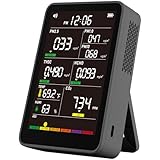
An indoor air quality monitor, for instance, a device like the AQItech 9AQI+7, acts as an impartial nose. It uses specialized sensors, often metal-oxide-semiconductor (MOS) sensors, to detect the total concentration of these airborne chemicals. Instead of a vague feeling that the air is “stuffy” or “new,” you get a concrete number, typically measured in milligrams per cubic meter (mg/m³) or parts per billion (ppb).
Seeing this data allows you to:
1. Establish a Baseline: Understand what your home’s normal TVOC level is.
2. Identify Sources: Notice a spike in the reading after you clean the bathroom or when your new bookshelf arrives? You’ve just found a source.
3. Verify Solutions: See if opening the windows or using an air purifier actually brings the numbers down.
This transforms you from a passive victim of your environment into an active manager of your home’s health.

Taking Back Control: Practical Steps to Reduce TVOCs
Knowing your TVOC levels is the first step. The next is taking action. Here’s a layered approach, from free and easy to more considered choices:
- Ventilate, Ventilate, Ventilate: This is the most effective and cheapest strategy. Open windows and doors for at least 15-20 minutes a day, even in winter, to exchange polluted indoor air with cleaner outdoor air. Use exhaust fans in kitchens and bathrooms.
- Control the Source:
- Choose Low-VOC Products: When painting, buying furniture, or installing new flooring, look for products labeled “Low-VOC” or “Zero-VOC.”
- “Air Out” New Items: Let new furniture or mattresses off-gas in a well-ventilated garage or spare room for a few days or weeks before bringing them into your main living space.
- Rethink “Clean” Scents: Opt for unscented cleaning products or use simple, natural alternatives like vinegar and baking soda. Avoid plug-in air fresheners.
- Purify the Air: If source control and ventilation aren’t enough, consider an air purifier. Ensure it has a substantial activated carbon filter, which is specifically designed to adsorb (not just trap) gas-phase pollutants like VOCs. A HEPA filter alone is for particles and will not remove TVOCs.
The journey to cleaner indoor air begins with awareness. That “new car smell” doesn’t have to be a source of anxiety, but rather a reminder that what we can’t see can still affect us. By understanding the nature of TVOCs and equipping ourselves with the tools to see them, we can turn our homes back into true havens of health and well-being.
