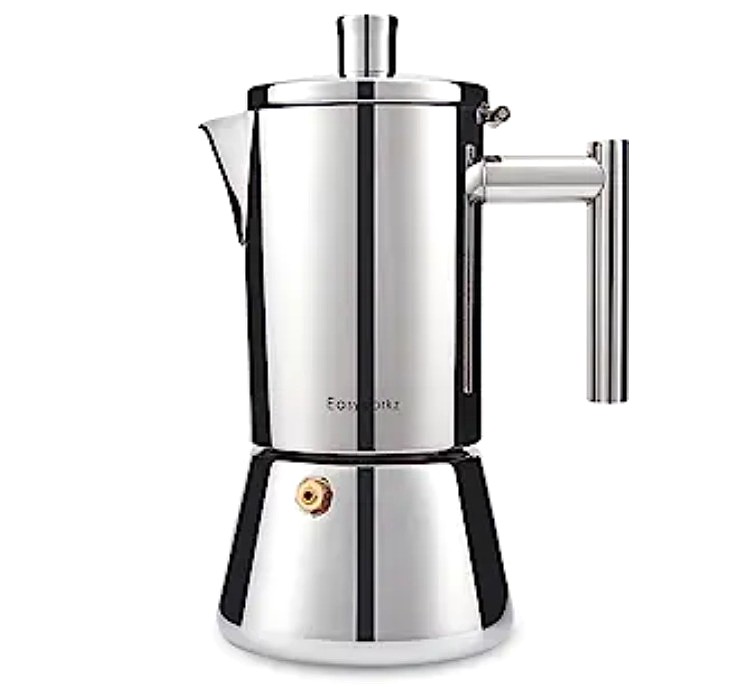

There’s a sound that echoes through kitchens from Bologna to Boston, a gentle, sputtering gurgle that signals the culmination of a small, daily miracle. It’s the voice of the Moka pot, and its story is a captivating blend of industrial ingenuity, artistic flair, and applied science. To truly appreciate the sleek, stainless steel coffee maker sitting on a modern stovetop today, we must first travel back to 1930s Italy, to an engineer named Alfonso Bialetti.
Bialetti wasn’t a coffee magnate. He was a craftsman working with aluminum. His revolutionary idea reportedly sparked while watching women wash laundry in a lisciveuse, a simple boiler that used the pressure of heated, soapy water to push it up through the clothes. He saw not laundry, but alchemy. What if, instead of soap and water, it was pure water and ground coffee? In 1933, this vision was cast into metal: the Moka Express was born.

The Aluminum Age: A Revolution in the Italian Kitchen
The original Moka Express was a masterpiece of its time. Its iconic octagonal shape, allowing for a better grip when tightening, was a nod to the prevailing Art Deco movement. Its material, aluminum, was a metal of the future—lightweight, an excellent heat conductor, and relatively inexpensive to manufacture. Bialetti’s invention did something profound: it democratized coffee. It liberated the rich, strong brew from the confines of the expensive urban café and placed it directly into the hands of the people, becoming a symbol of Italian hospitality and daily life.
The physics behind its operation was, and still is, brilliantly simple. Water in the bottom chamber is heated to produce steam, generating around 1.5 bars of pressure that pushes hot water up through a funnel, forcing it through a bed of coffee grounds, and into the top chamber as a rich, concentrated brew. But for all its genius, aluminum had its Achilles’ heel. Over time, the soft metal could pit and corrode. More critically for the discerning palate, its porous nature could retain the oils of coffees past, creating a “seasoning” that some users cherish, but others find imparts a faint, muddled or even metallic taste.
A Material Renaissance: The Inevitable Shift to Steel
As kitchens evolved and tastes refined, the Moka pot faced a new set of challenges. The rise of induction stovetops, which use electromagnetism to heat cookware, rendered traditional aluminum pots useless. Simultaneously, a new generation of coffee lovers began seeking absolute purity in their cup, a flavor untainted by the vessel itself. The stage was set for a material renaissance, and stainless steel was ready for its leading role. A modern brewer, such as the Easyworkz Diego Stovetop Espresso Maker, serves as a perfect case study of this evolution, showcasing not just a change in material, but a deep understanding of material science.
To simply say these new pots are “made of steel” is to miss the elegant engineering at play. Most high-quality stainless steel Moka pots are, in fact, a tale of two steels, each selected for its unique properties in a clever act of metallurgical teamwork.
The Science of Purity: Unpacking the Soul of a Modern Moka Pot
Let’s dissect a modern Moka pot like the Easyworkz Diego. You’ll find the upper chamber—the part that cradles your precious brew—is crafted from a different type of steel than the boiler base. This isn’t a cost-cutting measure; it’s a deliberate design choice rooted in chemistry and physics.
The upper chamber, the funnel, and all the parts that come into contact with the finished coffee are typically made from 18/8 austenitic stainless steel, also known as Type 304. The “18/8” denotes its composition of 18% chromium and 8% nickel. This alloy is exceptionally resistant to corrosion. Its greatest virtue is its invisible armor: a passivation layer. When exposed to oxygen, the chromium in the steel forms a microscopically thin, inert, and self-repairing layer of chromium oxide. This shield is what makes stainless steel “stainless.” It prevents the metal from reacting with the acidic compounds in coffee, ensuring that the only taste in your cup is that of the beans you so carefully selected. The nickel content stabilizes its crystal structure in a form called austenite, which makes it non-magnetic.
The boiler base, however, tells a different story. It is usually made from 18/0 ferritic stainless steel, or Type 430. Containing 18% chromium but a negligible amount of nickel, this steel has a different crystalline structure that is ferromagnetic. This is the key that unlocks the modern kitchen. When placed on an induction cooktop, the oscillating magnetic field induces powerful electrical currents within the steel base, generating heat with incredible efficiency. This clever, dual-material construction is the definitive solution to the modern Moka pot’s trifecta of needs: flavor integrity, long-term durability, and universal stovetop compatibility.

The Enduring Physics, Refined by Engineering
What’s remarkable is that through this material evolution, the core physics of the brew remains untouched—a testament to the sheer brilliance of Bialetti’s original design. The pressure dynamics, the extraction method, the very soul of the Moka pot is preserved. The innovation lies in the refinement. Modern engineering has gifted these pots with features like cool-touch, ergonomic handles that won’t melt over a misplaced gas flame, precision-milled threads for a perfect seal that prevents the leaks some older pots were prone to, and thoughtful accessories like reducer plates for brewing smaller volumes. These are not radical changes, but thoughtful improvements that honor the pot’s legacy while enhancing the user’s experience.
A Legacy Reborn
The journey of the Moka pot from a humble aluminum pot in 1930s Italy to a sophisticated stainless steel brewer in the 21st century is more than just a history of a coffee maker. It’s a story of how a timeless design adapts, informed by the advancements of science and the evolving desires of those who use it. The modern stainless steel Moka pot isn’t a rejection of the original, but its second act. It’s a classic, reborn with a new resilience and purity, ready to serve a new generation of coffee lovers, still whispering its iconic, gurgling promise: a sublime cup of coffee, right at home.
