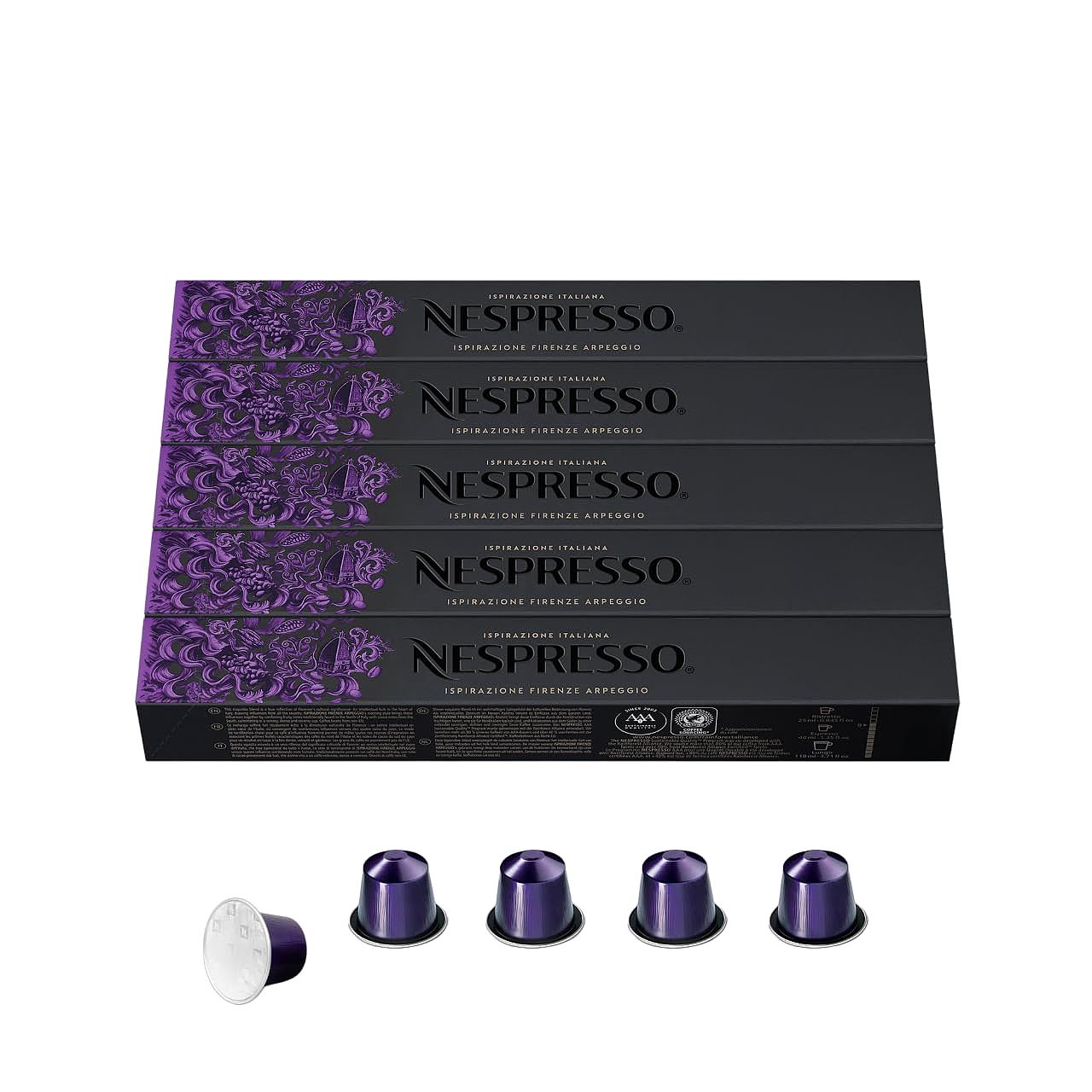

The familiar, satisfying click. A low hum builds as the Nespresso machine awakens. Within moments, a rich, dark stream, crowned with a velvety, hazelnut-hued foam, begins to flow. Its aroma, a complex banner of things toasted and sweet, unfurls into the room. For millions, this is a daily ritual: the creation of a 1.35-ounce Ispirazione Arpeggio Intenso. It is a potent, reliable punctuation mark in the narrative of a day.
But have you ever paused, cup in hand, to truly question this minor miracle of modern convenience? What intricate dance of nature, chemistry, and physics culminates in this consistently intense and creamy espresso? This isn’t just about hot water hitting ground coffee. It’s an invitation to embark on a forensic journey, to peel back the layers of an Arpeggio pod and discover the controlled alchemy at play. We will travel backward from the finished cup to the fiery heart of the roaster, and further still to the sun-drenched farms, dissecting the science that transforms a humble agricultural product into a sophisticated, high-tech elixir.

The Verdict in the Cup: Decoding Crema, Aroma, and Body
Before we trace its origins, let’s first examine the evidence. A well-prepared Arpeggio Intenso presents three key characteristics. First, the crema: a dense, persistent layer of reddish-brown foam. It’s more than a pretty topping; it’s a visual promise of a well-extracted espresso, trapping aromatic compounds and contributing to the velvety texture. Second, the aroma: the product description mentions “grilled notes” and “subtle cocoa notes.” This is the scent profile, a direct result of chemical transformations the bean has undergone. Finally, the body: Arpeggio is described as “intense and creamy.” This is the tactile sensation, the weight and texture of the liquid on the palate, a feeling of substance and richness. These three elements—crema, aroma, and body—are the mysteries we are setting out to solve.
The Moment of Truth: The Physics of High-Pressure Extraction
This velvety crema and intense aroma aren’t born in the cup. They are the dramatic finale of a high-stakes performance that happens in a fraction of a second. To understand it, we must rewind just a few moments, to the heart of the machine, where water meets coffee under immense pressure.
Traditional Italian espresso is defined by pressure, and Nespresso machines replicate this crucial parameter, forcing hot water—optimally heated to between 195-205°F (90-96°C)—through the compacted bed of coffee grounds at approximately 9 bars. That is nine times the atmospheric pressure at sea level. This isn’t arbitrary; this intense force is the engine of extraction. It allows the hot water to rapidly dissolve a high concentration of soluble solids from the coffee—sugars, acids, and melanoidins. Simultaneously, it emulsifies the coffee’s natural oils. This energetic, swift passage is key to capturing the most desirable flavors while minimizing the extraction of overly bitter compounds that can arise from prolonged contact.
The result of this high-pressure encounter is the crema. It is a complex colloid, a suspension of microscopic bubbles of carbon dioxide (a byproduct of roasting, released under pressure), emulsified coffee oils, and suspended coffee solids. The crema is the signature of this process, a direct physical manifestation of a successful, forceful extraction. The 1.35oz serving size is not just a nod to tradition; it is a calculated volume to ensure this potent essence remains perfectly balanced, a concentrated narrative of all the bean has to offer.
The Inferno’s Embrace: Forging Intensity in the Roaster
But where do the “grilled” and “cocoa” notes, the very soul of Arpeggio’s flavor, come from? For that, we must travel back from the kitchen to the industrial roastery, a place of dramatic, controlled transformation. Here, green, somewhat grassy-smelling seeds are transmuted into fragrant, dark jewels.
This metamorphosis is orchestrated by two primary chemical phenomena. The first is the Maillard reaction, the same magic responsible for the browning of bread crust or the savory notes of seared steak. Beginning at temperatures around 300°F (150°C), it’s a complex cascade of interactions between amino acids and reducing sugars. In a dark roast like Arpeggio, this reaction is pushed further, creating hundreds of new aromatic compounds, including the pyrazines that contribute those deep, toasty, and “grilled” notes.
As temperatures climb higher, caramelization takes center stage. This is the browning of sugars themselves, breaking them down into new compounds that lend bittersweetness and body. The subtle “cocoa notes” and “woody hints” are significantly shaped here, as specific precursors in the bean are transformed. Nespresso’s “Intensity 9” rating is a reflection of this process. Intensity is not just bitterness; it’s a measure of the coffee’s body, the power of its aroma, and the boldness of its flavor profile—all direct consequences of navigating these fiery chemical transformations to their potent conclusion.

The Arabica Blueprint: Whispers from the Highlands
The roaster, however, is not a magician creating something from nothing. It is a master artist, working with the canvas it is given. The fiery transformations of Maillard and caramelization can only unlock the potential that is already locked within the green bean’s DNA. So, our journey must take us further back, from the European roastery to the sun-drenched highlands of South and Central America.
Nespresso states that Arpeggio is forged from “a selection of the best South and Central American Arabicas.” Coffea arabica is revered for its aromatic complexity, demanding specific high-altitude growing conditions. The “fruity or malted profiles” mentioned in the unroasted beans are the raw, inherent potential gifted by their terroir—that unique combination of soil, climate, and cultivation. The art of blending is crucial here. Nespresso’s experts don’t rely on a single origin. They act as conductors, selecting different Arabicas—one for body, another for a specific aromatic nuance—to create a consistent and complex baseline. This blend is the foundational blueprint, ensuring that even after an intense dark roast, the resulting cup is a harmonious symphony, not a monolithic note of bitterness.
The Capsule’s Secret: An Aluminum Guardian of Freshness
Our journey of deconstruction has one final step. All the careful work of blending and roasting would be for naught if the ground coffee were left exposed. Roasted coffee’s worst enemies are oxygen, light, and moisture, which rapidly degrade its precious, volatile aromatic compounds. This is where the capsule’s engineering becomes paramount.
The choice of aluminum is a deliberate decision rooted in material science. Aluminum serves as a near-perfect hermetic barrier. It is highly impermeable to gases and light, and it effectively seals out moisture. From the moment the Arpeggio coffee is ground and sealed at the production facility, its complex array of hundreds of volatile compounds is protected from degradation. The capsule is, in essence, a time capsule. It is the guardian that ensures the roastery-fresh character and the full intensity of flavor, painstakingly developed through chemistry and agriculture, are delivered intact to the final, high-pressure moment of extraction in your machine.

Conclusion: A Symphony of Control
And so, we arrive back at the cup. That 1.35-ounce serving of Ispirazione Arpeggio Intenso is far more than a simple brew. It is the endpoint of a chain of meticulous control. It is agricultural potential, refined by chemical alchemy, actualized by physical force, and preserved by material science. It is a testament to the modern food industry’s ability to take a complex, variable natural product and engineer it into a perfectly consistent and accessible experience.
Each sip is an acknowledgment of this intricate process. While single-origin enthusiasts might argue that this consistency trades the thrill of surprise for the comfort of certainty, the Nespresso system unapologetically prioritizes reliability. It raises a final question for us to ponder: When we savor this flawless, replicable espresso, are we tasting the soul of a coffee bean, or are we admiring the perfection of a scientific formula? The answer, perhaps, lies in the bittersweet notes of the Arpeggio itself.
