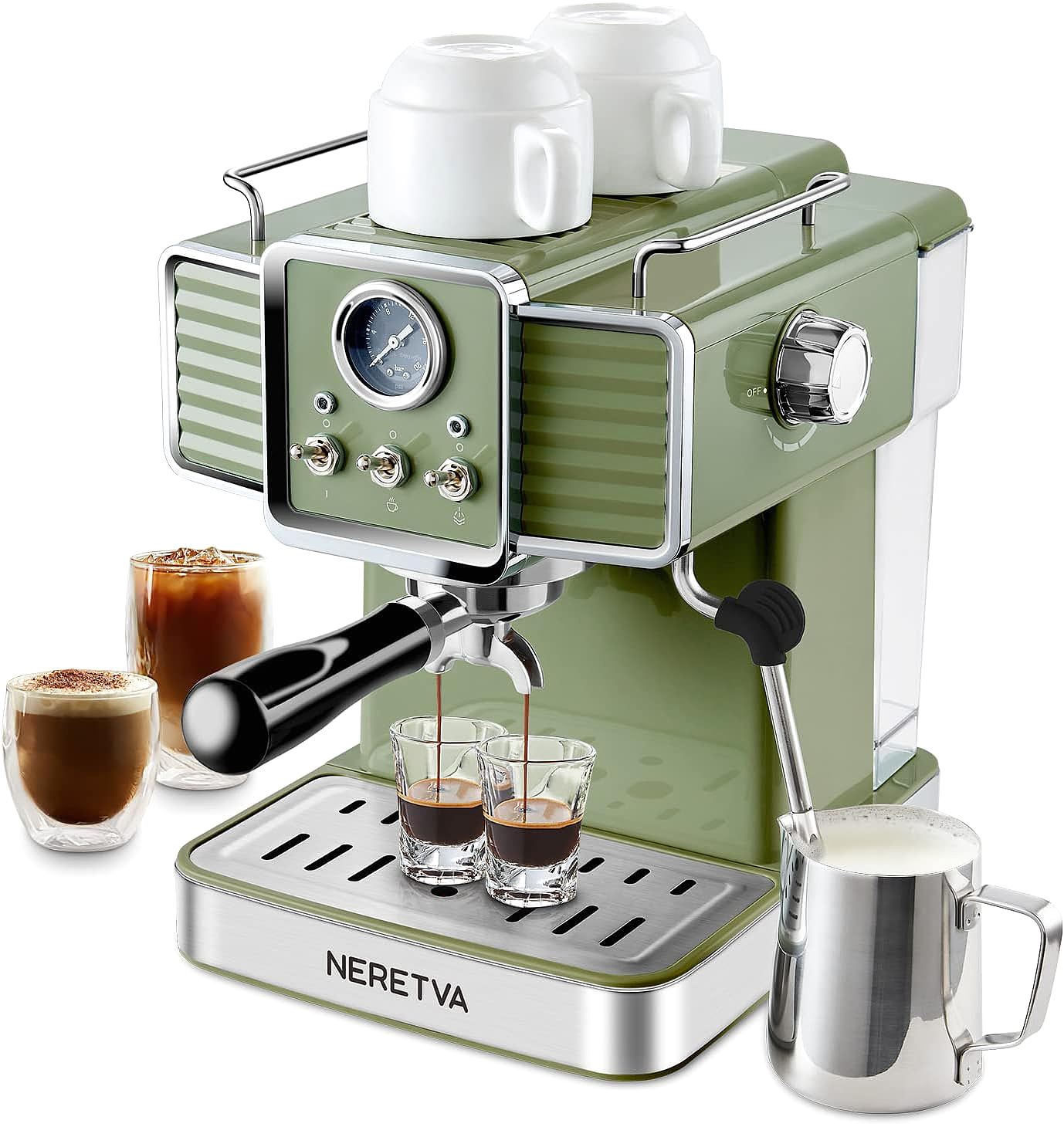

In the world of espresso, aesthetics often command a premium. The “Retro Industrial” look—think Smeg or Ascaso—usually comes with a four-figure price tag. The Neretva PE3690U disrupts this by offering that coveted vintage visual language at an entry-level price point. But experienced baristas know that chrome and curves do not brew coffee; physics does.
For the home user, the challenge with affordable machines is not capability, but consistency. The plastic construction and lightweight thermoblock behave differently than heavy brass boilers. To get café-quality shots from this machine, you must stop treating it like a toaster and start treating it like a manual instrument that requires specific thermal and hydraulic management.

Thermal Management: The Plastic Reality
One common user complaint is “lukewarm coffee.” This is a thermodynamic inevitability of lightweight materials. Unlike metal, plastic has low Thermal Mass, meaning it doesn’t retain heat well. If you pull a shot into a cold cup through a cold group head, the temperature will plummet 10-15°F instantly, killing the flavor.
The Compensation Strategy (Blank Shot Protocol):
To overcome this, you must manually pre-heat the system.
1. Run a Blank Shot: Before locking in your coffee, run a cycle of just hot water through the empty portafilter and into your cup.
2. The Effect: This heats up the internal tubing, the group head, the metal portafilter basket, and your cup simultaneously.
3. The Result: When you finally brew the coffee, the water temperature stays stable because it isn’t wasting energy heating up cold plastic and metal. This simple step transforms sour, tepid espresso into a hot, sweet extraction.
Hydraulic Diagnostics: Reading the Gauge
The front-mounted Pressure Gauge is your best friend. While the pump is rated for 15 bars (maximum potential), espresso should ideally extract around 9-12 bars on this type of machine.
- Low Pressure (<5 Bar): The water is rushing through too fast. Your grind is too coarse or your dose is too low. The result is watery, sour coffee.
- High Pressure (>13 Bar): The machine is choking. The pump sounds muted and flow is a drip. Your grind is too fine or you tamped too hard.
- The Leak Factor: Some users report leaking. Often, this is due to Backpressure. If the grind is too fine (choking the machine), the pressure has to go somewhere, often forcing its way past the gasket. Adjusting your grind coarser usually fixes the “leak.”

Milk Texturing: The Steam Wand Physics
The Neretva features a traditional steam wand, not an automatic frother. This puts the control in your hands.
* The Purge: Before steaming, always open the valve for 3 seconds into the drip tray. This ejects Condensate (liquid water) that has cooled in the wand. If you skip this, you will water down your milk instantly.
* The Vortex: Position the tip just below the surface to create a “chirping” sound (aeration) for 5-10 seconds, then submerge slightly to create a vortex. The vortex folds the bubbles into the milk, creating the Microfoam (wet paint texture) needed for latte art, rather than the dry “bath bubbles” of amateur cappuccinos.

Workflow and Maintenance
The “Vintage Green” finish is beautiful, but it hides a practical need: Hygiene.
* The Puck Screen: Always wipe the shower screen (where water comes out) after every shot. Coffee oils go rancid quickly on plastic and rubber surfaces.
* The Water Tank: The 1.6L tank is removable. Use filtered water to prevent scale buildup in the narrow thermoblock tubes, which is the #1 killer of entry-level machines.

Conclusion: Style with Substance
The Neretva PE3690U is more than a pretty face. While it lacks the thermal mass of a commercial machine, it compensates with a user-friendly interface and diagnostic tools like the pressure gauge. By understanding its physical limitations—specifically regarding heat retention—and adopting a “Pre-heat Protocol,” you can extract shots that rival machines costing three times as much. It is the perfect launchpad for the style-conscious home barista.
