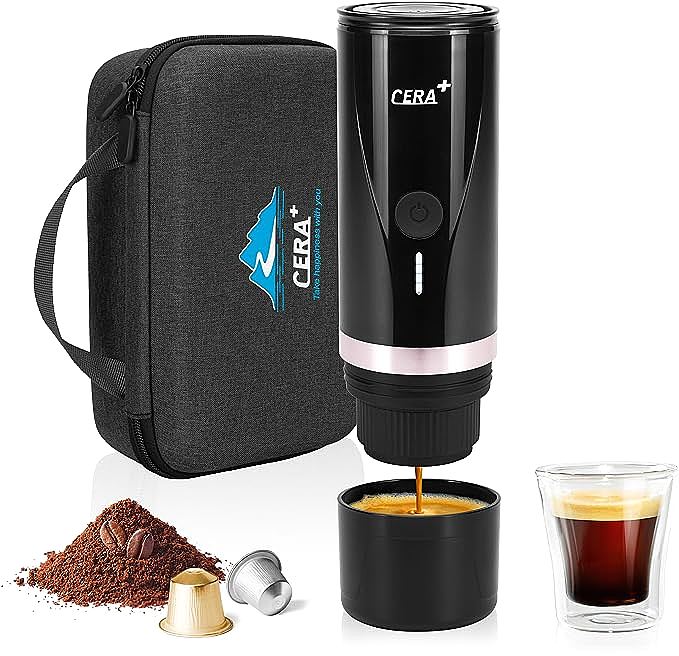
There’s a special kind of thrill in unboxing a new piece of technology that promises to solve a problem you hold dear. For many of us, that’s the CERA+ PCM03 or a similar device, a sleek cylinder that whispers of café-quality espresso on a remote campsite or in a sterile airport hotel. The official manual provides the blueprint, the ideal path. But then comes the reality of a bumpy road, a forgotten charging cable, or a stubborn coffee pod. The honeymoon phase of a perfect first cup can quickly give way to a long-term relationship filled with quirks and frustrations.
This guide is your experienced companion for that journey. Think of it as the collection of tips, warnings, and “I wish I’d known that sooner” moments that should have come in the box. We’ll use the CERA+ PCM03 as our primary example, but the principles here apply to almost any portable electric espresso machine. Our goal is to bridge the gap between the manual’s clean instructions and the messy, wonderful reality of making coffee on the go, turning your new gadget from a novelty into a reliable travel partner.

Day One: The Rituals of a Successful First Brew
Before you even think about coffee, there are a few foundational steps to ensure you and your new machine get off to a great start.
Before the Coffee: The Power-Up Strategy
The user manual will tell you to charge the device. We’re telling you that this first full charge is the most important one of its life. Plug it in with a proper 10W/15W adapter (your old 5W phone charger will take an eternity) and let it sit until all four LED lights become solid and then turn off. This helps to calibrate the battery management system. While it’s charging, take a moment to truly understand those LEDs. They don’t just show battery level; during heating, they become a real-time thermometer, with each light representing a new temperature range up to 96°C. Finally, before any coffee touches it, run a full heating and extraction cycle with just water. This flushes out any manufacturing dust and lets you see and hear how the machine operates without the pressure of wasting a good coffee pod.
Your First Shot: A Step-by-Step Guide to Avoiding a Mess
Now for the main event. When assembling the pod or ground coffee chamber, tighten it until it is firm. Then, give it one last gentle, quarter-turn nudge. Most leaking issues stem from a chamber that feels tight but isn’t quite sealed against 20 bars of pressure. When adding water, resist the urge to fill it to the absolute max line, especially at first. Leaving a little headspace can sometimes help the machine build pressure more effectively. Finally, let’s clarify the button presses, the number one cause of first-time user error:
1. Start Heating: Press and hold the button for 2 seconds. You’ll hear 1 beep.
2. Wait: The machine will now heat for 3-4 minutes. The LEDs will climb. Don’t touch it.
3. Heating Complete: You’ll hear a series of 10 beeps. Now it’s ready.
4. Extract Coffee: Press the button twice, quickly. The pump will whir to life.

The Daily Grind: Mastering Your Mobile Café
You’ve successfully brewed your first cup. Now, the real journey begins: moving beyond the basics to consistently craft a great shot. This means making a crucial choice.
Pods vs. Grounds: A Practical Decision Matrix
- Team Pods (The Sprinter): This is your path to ultimate convenience, consistency, and clean-up. It’s perfect for office use or quick stops. The Pro Tip: To ensure a clean puncture of the Nespresso pod, place it in the adapter and press down firmly with your thumb before screwing the chamber on. This pre-seats the capsule against the piercing blades.
- Team Grounds (The Marathoner): This route offers superior flavor, freshness, and lower long-term cost, at the price of a little more mess. It’s ideal for connoisseurs or those on longer trips with access to a grinder. The Pro Tip: Don’t just scoop the coffee in. After filling the basket, give it a gentle tap on the counter to settle the grounds, then use the back of the included spoon to lightly tamp it down. This consistency is key to a great extraction.
The Pursuit of Crema: Tips from the Trenches
A rich, stable crema is the hallmark of a good espresso. If your shots are looking a little thin, try these techniques:
* Use Fresh Beans: Stale coffee, especially pre-ground, has lost the CO2 needed for good crema.
* Pre-heat Everything: If you can, run a heating cycle with just water first, discard it, then brew your coffee. A warm machine produces a better shot.
* Use Boiling Water: When you have access to a kettle, use boiling water. This saves a massive amount of battery and often results in a hotter, richer shot because the machine doesn’t have to work as hard.

Living With Your Barista: The Unspoken Truths of Maintenance
Long-term harmony with your portable barista requires commitment—specifically, a commitment to cleaning and a smart approach to its energy needs.
The Cleaning Commitment: More Than Just a Rinse
- The 30-Second Daily: After each use, immediately eject the pod or grounds and run a short extraction cycle with just water. This flushes the coffee oils out before they can build up and turn rancid.
- The 5-Minute Weekly: Once a week, disassemble the filter basket/pod adapter and use the included brush with a drop of soap to scrub the mesh screen and surrounding areas. This is where bitter-tasting oils love to hide.
- Leave No Trace: When outdoors, pack out your used pods. For grounds, either pack them out or disperse them far from water sources, as you would with other food waste.
The Charging Game: Real-World Battery Management
- Embrace the Cold Reality: Lithium-ion batteries hate the cold. As stated by research from sources like Battery University, performance can drop by 20% or more near freezing temperatures. On a winter camping trip, expect 2 cups per charge, not 4. Keep the device in an insulated bag or close to your body when not in use.
- The Car Charger Rule: The 12V car charger is fantastic. Use it while the engine is running. Avoid charging it for hours with the engine off, as it could drain your car’s battery.
- Power Bank Lifeline: For serious travelers, a high-quality Power Bank with at least a 15W Power Delivery (PD) output is a non-negotiable accessory. It’s your guarantee of coffee, even after a long flight.
Troubleshooting Toolkit: When Your Coffee Companion Complains
Before frustration sets in, listen to your machine. It’s usually trying to tell you something simple.
Decoding the Beeps
- 1 Beep: “Okay, I’m starting to heat the water now.”
- 10 Beeps: “Water is hot and ready! Please tell me when to brew.”
- 3 Beeps (and shutdown): This is the important one. It means one of three things: “I’m out of battery,” “You forgot to add water,” or “I’m overheated from back-to-back brews, please give me a 15-minute break.”
Quick Fixes Table
| Symptom | Probable Cause(s) | Solution(s) |
|---|---|---|
| Leaking During Extraction | 1. Chamber not tightened enough. 2. Silicone seal is dirty/has coffee grounds on it. |
1. Unscrew and re-tighten firmly. 2. Wipe the seal clean before assembly. |
| Fails to Heat (3 beeps) | 1. Battery is too low. 2. No water in the tank. 3. Device is overheated. |
1. Recharge the device. 2. Add water. 3. Wait 10-15 minutes for it to cool down. |
| Watery, No Crema | 1. Coffee grind is too coarse. 2. Coffee is stale. 3. Chamber is not properly sealed. |
1. Use a finer, espresso-specific grind. 2. Use freshly roasted and ground beans. 3. Check and tighten the brew chamber. |
Conclusion: From Gadget to Companion
Your portable espresso machine is far more than the sum of its parts. It’s a tool of liberation for the coffee-obsessed. The key to unlocking its full potential lies not just in following the manual, but in understanding its habits, respecting its limitations, and establishing a few simple routines for its care. By managing your expectations about battery life and committing to a quick cleaning ritual, you can transform this impressive piece of technology from a cool gadget into a steadfast and rewarding companion, ready to deliver a moment of caffeinated bliss wherever your adventures may take you.
