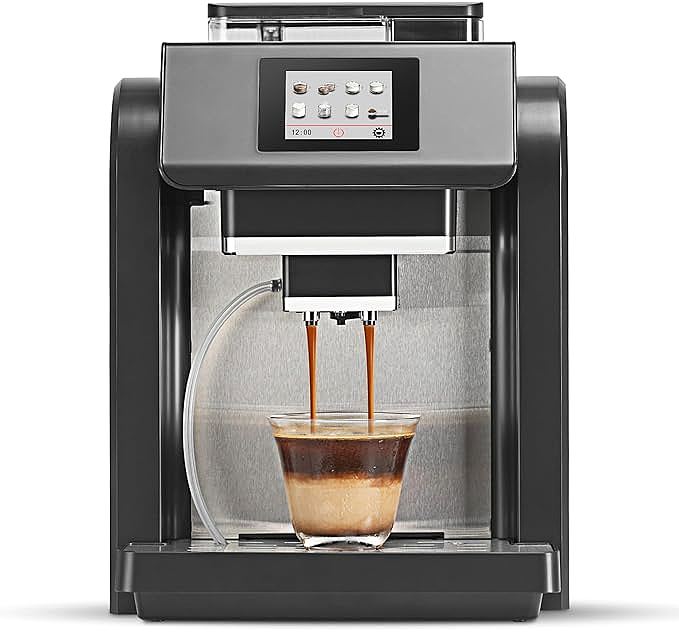
The quest for the perfect cup of espresso has historically been a ritual defined by manual dexterity and a deep understanding of variable management. For decades, the title of “Barista” carried with it a requirement for mastery over a complex dance of pressure, temperature, and timing. However, a significant shift is occurring in the landscape of home brewing. The emergence of high-performance systems, exemplified by the Mcilpoog ES317 Fully Automatic Espresso Coffee Machine, marks a transition from manual artistry to automated engineering precision. This evolution is not merely about convenience; it is about the scientific democratization of high-quality coffee extraction, allowing the average enthusiast to access results that were once the sole province of professional laboratories.
To understand why this shift is permanent, one must look beyond the sleek exterior of modern machines and delve into the fundamental physics of espresso extraction. An espresso is, at its core, a high-pressure infusion process. Unlike drip coffee, which relies on gravity to slowly pull water through a filter, espresso requires the forceful penetration of a tightly packed “puck” of coffee grounds. This process extracts not just water-soluble compounds, but also insoluble oils and gases that create the characteristic body and crema. When we analyze the mechanics of a fully automatic system, we are looking at a sophisticated internal logic designed to manage these physical laws without human intervention, effectively turning complex fluid dynamics into a reliable, one-touch experience.
The Fluid Dynamics of Extraction: Decoding the 19-Bar System
The most prominent specification often cited in premium espresso technology is the pump pressure, frequently reaching 19 bars. In the context of fluid dynamics, a “bar” is a unit of pressure roughly equivalent to the atmospheric pressure at sea level. While the industry-standard extraction pressure at the group head is generally accepted to be 9 bars, the engineering requirement for a 19-bar pump serves a far more strategic purpose than simple marketing. This higher ceiling provides what engineers call “static pressure headroom.” In a fully automatic environment, where the machine must compensate for varying grind sizes and bean densities, a 19-bar pump ensures that the system can maintain a consistent 9-bar flow even when encountering significant resistance.
This surplus of power is critical for stability. Imagine a car climbing a steep hill; an engine with higher horsepower doesn’t necessarily need to go faster, but it maintains its speed with less strain than a smaller engine pushed to its limit. Similarly, the 19-bar pump in the Mcilpoog ES317 allows for a more controlled and steady infusion. This stability is the key to preventing “channeling”—a phenomenon where water finds the path of least resistance through the coffee puck, leading to uneven extraction. By providing a robust and consistent pressure source, the machine ensures that the water interacts uniformly with every individual grain of coffee, resulting in a balanced flavor profile that captures the bean’s full spectrum.

The science of extraction pressure is inextricably linked to the concept of crema—the golden, velvety foam that sits atop a well-pulled shot. Crema is a complex emulsion of carbon dioxide and coffee oils. The high pressure of the 19-bar system forces these gases into a supersaturated solution within the liquid espresso. As the liquid exits the pressurized environment of the portafilter and enters the atmospheric pressure of the cup, the gases expand, creating millions of tiny bubbles trapped by the coffee’s natural oils. A machine’s ability to produce rich, persistent crema is a direct indicator of its structural integrity and the precision of its pump management.
Thermal Stability and the Real-Time Monitoring Threshold
Beyond pressure, temperature is the second pillar of the espresso trinity. The chemical reactions that occur during extraction are highly sensitive to thermal fluctuations. If the water is too cool (under 90°C), the acids in the coffee will dominate, leading to a sour, thin, and underwhelming cup. Conversely, if the water exceeds 96°C, it risks “burning” the delicate aromatic compounds, resulting in a harsh, bitter finish. In traditional manual machines, “temperature surfing” was a common but frustrating practice. Modern engineering solves this through real-time temperature monitoring and sophisticated heating elements.
The inclusion of real-time monitoring in systems like the Mcilpoog ES317 is a game-changer for consistency. This technology involves sensors placed within the water path that feed data back to a central microprocessor hundreds of times per second. If the system detects even a half-degree drop in temperature during the pull, it can instantaneously adjust the wattage of the heating element (often a 1450-watt system) to compensate. This level of granular control ensures that every milliliter of water hitting the coffee grounds is at the optimal thermal threshold for extraction. This thermal stability is what allows a fully automatic machine to replicate the performance of a high-end commercial semi-automatic machine, cup after cup.
Thermal management also extends to the physical components of the machine. Professional-grade systems emphasize the importance of warming the cup before extraction. This is not for comfort, but for physics. When hot espresso hits a cold ceramic cup, the temperature drop can be as high as 10 to 15 degrees in seconds, causing the crema to collapse and the flavor profile to shift. The top-mounted cup warmer on these machines utilizes residual heat from the internal boiler, ensuring that the vessel is thermally compatible with the liquid it receives. This holistic approach to temperature reflects a deep understanding of the delicate chemistry involved in coffee science.
The Human-Machine Interface: TFT Display and Interaction Logic
The transition from knobs and levers to a 3.5” TFT touchscreen represents more than just a modernization of aesthetics; it is a fundamental shift in user interaction logic. In the world of industrial design, the “cognitive load” refers to the amount of mental effort required to complete a task. Manual espresso making has a high cognitive load, requiring the user to juggle multiple variables simultaneously. A well-designed TFT interface reduces this load to a single point of interaction. By presenting the user with clear, colorful icons and intuitive menus, the machine abstracts the complex back-end engineering into a series of simple choices.
This intuitive design is particularly vital when dealing with “7 coffee varieties.” Each variety—be it a classic espresso, a creamy latte, or a long coffee—requires a different set of internal parameters. For a latte, the machine must manage the sequence of grinding, brewing, and milk frothing. The TFT display acts as the conductor of this orchestra. When a user selects a recipe, the machine’s software executes a pre-programmed sequence of events: it calculates the precise dose of grounds, adjusts the water volume, monitors the temperature, and times the milk delivery. This level of integration ensures that the complexity of the recipe does not lead to a degradation in quality.
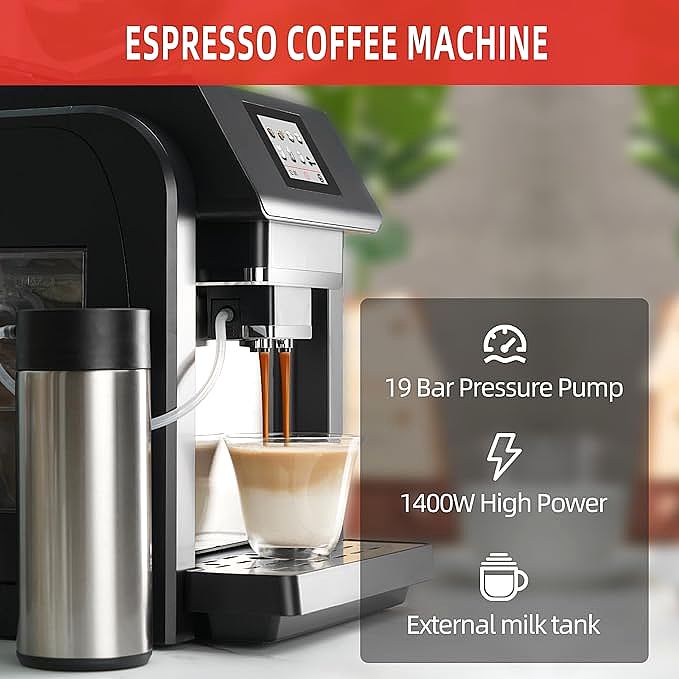
Furthermore, the visual feedback provided by a high-resolution screen enhances the user experience by providing a sense of control and transparency. Seeing a progress bar or a real-time status update reassures the user that the machine is performing its intended function. This is a critical aspect of “Emotional Design,” where the interaction with the product creates a sense of satisfaction and trust. In the context of a home office or a busy kitchen, this efficiency is invaluable. The machine ceases to be a complex tool that requires a manual and becomes a reliable partner in the daily ritual of coffee consumption.
Maintenance Science: The Longevity of Self-Cleaning Systems
One of the most significant barriers to owning a professional-grade espresso machine has traditionally been the maintenance. Coffee is an oily, acidic substance that leaves residue on every surface it touches. Without rigorous cleaning, these oils go rancid, scale builds up in the boilers, and the flavor of the coffee is permanently compromised. The engineering response to this challenge is the implementation of automated cleaning and descaling cycles. These systems use pressurized water and specialized logic to flush the internal brewing unit and milk paths after every use.
The “Super Easy-To-Clean” philosophy, seen in the magnetic drip tray and auto-clean features of the ES317, is a reflection of lifecycle engineering. By making the maintenance tasks effortless, the machine ensures its own longevity and performance. Scale, a byproduct of calcium and magnesium in water, is the silent killer of coffee machines. An automated descaling prompt and cycle take the guesswork out of water chemistry, protecting the internal 1450-watt heating system from damage. This proactive approach to maintenance ensures that the machine remains a high-value asset in the home for years to come.
In conclusion, the rise of fully automatic espresso machines represents the pinnacle of home appliance engineering. By mastering the fluid dynamics of high-pressure extraction, ensuring absolute thermal stability through real-time monitoring, and simplifying the user experience through intuitive TFT interfaces, machines like the Mcilpoog ES317 have redefined what is possible in a domestic kitchen. They bridge the gap between the complex science of coffee and the simple joy of a perfect cup, proving that in the modern era, precision and convenience can indeed brew brilliance together.
