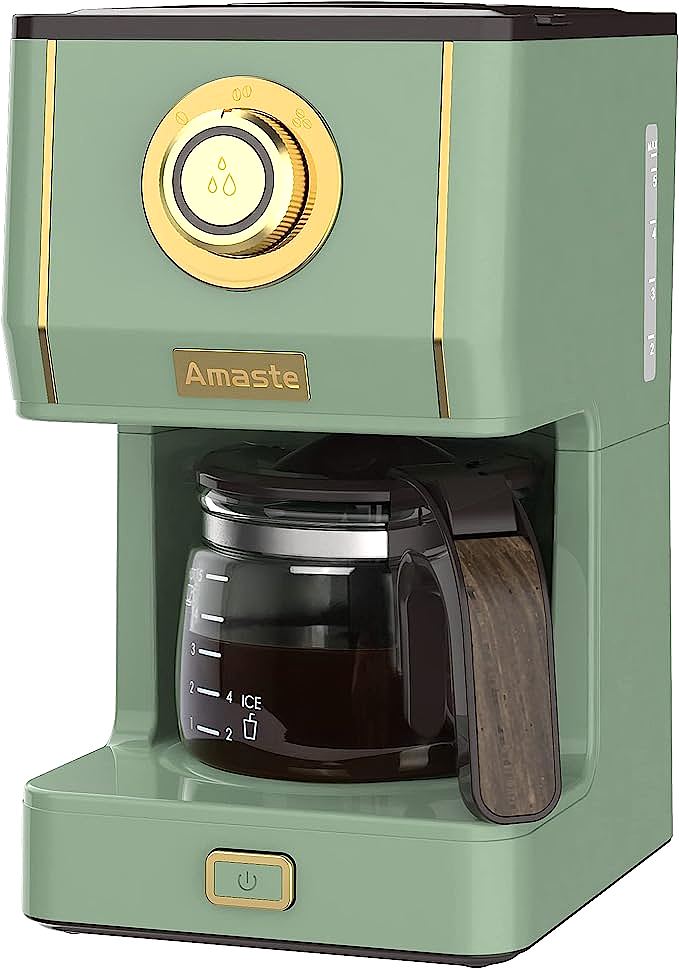
In an era defined by hyper-efficiency and digital intangibility, a curious counter-movement has taken root in the heart of the modern home. It is a quiet rebellion against the sterile, touch-screen dominated aesthetic of the 21st century, manifesting instead as a hunger for tactile experiences, nostalgic forms, and the deliberate slowing of time. This is not merely a design trend; it is a psychological shift. We are witnessing the renaissance of the morning ritual, where the tools we use are no longer invisible appliances but central characters in the narrative of our day. The resurgence of retro-styled coffee makers, such as the Amaste CM 1003AE, is arguably the clearest signal of this cultural pivot. These machines do not just dispense caffeine; they serve as anchors, grounding us in a sensory experience that bridges the warmth of the past with the functionality of the present.
To understand why a machine’s appearance matters as much as its output, we must look beyond the specification sheet and into the realm of environmental psychology and gastrophysics. Why does coffee poured from a matcha-green, curve-laden vessel taste different—subjectively, if not chemically—than coffee from a brutalist, stainless-steel box? The answer lies in the complex interplay between aesthetics, anticipation, and the human need for emotional connection with our physical surroundings. This article explores the deep currents driving the retro appliance revival, the science of “dopamine decor,” and how accessible tools are democratizing the art of the slow brew ritual.
The Psychology of “Dopamine Decor” and Emotional Design
The concept of “form follows function” has dominated industrial design for nearly a century, often resulting in appliances that are efficient but emotionally hollow. However, a new paradigm is emerging: emotional design. Donald Norman, a pioneer in cognitive science and design, posits that attractive things actually work better—or rather, we perceive them to work better because they induce a positive emotional state that makes us more tolerant of minor imperfections and more creative in our interactions. This is the foundation of the “Dopamine Decor” trend, which encourages the use of color, texture, and nostalgia to induce joy.
The Nostalgia Loop
Retro design, characterized by soft curves, analog buttons, and a distinct lack of digital displays, triggers a “nostalgia loop.” For older generations, it evokes memories of a grandmother’s kitchen or the comfort of a mid-century diner. For younger generations, particularly Gen Z and Millennials, it represents a “anemoia”—nostalgia for a time they never experienced, perceived as simpler and more authentic than the high-stress, always-on digital present.
The Amaste CM 1003AE exemplifies this aesthetic strategy. Its design language is unapologetically mid-century modern. The silhouette avoids sharp, aggressive angles in favor of approachable, organic curves. The color palette—specifically the “Matcha Green”—taps into biophilic design principles, where earth tones and natural hues reduce physiological stress markers. Unlike the cold, clinical greys of standard tech, these colors act as visual comfort food.

When placed on a countertop, such an object ceases to be a mere utility. It becomes a piece of “functional sculpture.” The psychological impact is tangible: the act of approaching a visually pleasing object releases a micro-dose of dopamine before the brewing process even begins. This pre-consumption pleasure primes the brain to enjoy the coffee more, a phenomenon well-documented in sensory science where visual expectation significantly influences taste perception.
The Architecture of the Slow Brew Ritual
Beyond aesthetics, there is the matter of time. Modern technology sells us the promise of speed—espresso in 3 seconds, instant pods in 15. Yet, the retro-style drip machine champions a different virtue: patience. The revival of drip coffee is inextricably linked to the “Slow Food” and “Slow Living” movements, which advocate for mindfulness in daily activities.
The Deceleration Mechanism
A drip coffee cycle is a process that cannot be rushed without compromising quality. It requires a sequence of events: the heating of water, the rise through the piping, the gentle shower over the grounds, the blooming of the coffee, and the slow percolation into the carafe. This 5-to-10-minute window creates a “temporal break” in the morning routine. It forces a pause.
The user interface of machines like the Amaste further reinforces this. In a world of touchscreens and app-connectivity, the tactile feedback of a physical button—a simple “click”—is incredibly grounding. It requires physical engagement. The “Strong” brewing mode on this specific machine, which users note takes noticeably longer, is not a bug but a feature of this philosophy. It extends the contact time between water and grounds, prioritizing depth of flavor over speed of delivery. This is a mechanical enforcement of mindfulness.
Visualizing the Process
The use of glass in the carafe is another critical component of the ritual. Unlike thermal stainless steel carafes which hide the coffee, a glass pot offers transparency. Watching the dark liquid rhythmically drop into the vessel is a meditative act, similar to watching a fire or rainfall. It provides visual feedback on the progress of the brew, building anticipation. The 25 oz capacity (roughly 5 cups) of the Amaste unit further defines the ritual’s scope: it is intimate. It is not a 12-cup office workhorse designed to fuel a department; it is sized for a solitary morning of reading or a shared breakfast between two people. The scale itself dictates the social dynamic of the coffee moment.
The Democratization of Brewing Variables
Historically, the ability to manipulate brewing variables—temperature, flow rate, saturation—was reserved for high-end “prosumer” equipment costing hundreds of dollars. The budget-friendly retro sector is now disrupting this exclusivity, bringing nuanced brewing control to a wider audience.
Flow Rate as a Flavor Dial
The core variable in drip coffee is extraction yield, which is heavily influenced by how long the water interacts with the coffee grounds.
* Mild Mode: Typically involves a faster flow rate. The water passes through quickly, extracting the easily soluble acids and aromatics but leaving behind the heavier, sometimes bitter compounds. The result is a lighter, tea-like body with higher perceived acidity.
* Strong Mode: This mode often employs a “pulse brew” or restricted flow mechanism. By slowing down the water delivery, the grounds are fully saturated and immersed for longer. This allows for the extraction of less soluble sugars and dry distillates, creating a cup with a heavier mouthfeel and richer, “bass note” flavors.
The Amaste CM 1003AE’s inclusion of these three distinct modes (Mild, Medium, Strong) in an entry-level machine represents a significant shift. It empowers the casual user to experiment with extraction theory without needing a degree in chemistry. It transforms the user from a passive consumer (“I want coffee”) to an active participant (“I want to highlight the nutty notes of this roast”).

Materiality and the Sustainability of “Keepers”
A critical aspect of the evergreen appeal of such appliances is the conversation around sustainability—not just in terms of energy, but in terms of waste and longevity. The “throwaway culture” of cheap appliances is being challenged by a desire for “keepers,” objects we want to maintain and use for years.
The Filter Debate: Mesh vs. Paper
The shift towards reusable mesh filters, a standard feature in the Amaste and similar retro models, addresses a significant environmental pain point: the billions of paper filters discarded annually. However, this choice also fundamentally alters the flavor profile.
* Paper Filters: These are extremely fine, trapping not just sediment but also the coffee oils (diterpenes like cafestol). This produces a “clean” cup with high clarity but lighter body.
* Mesh Filters: The reusable nylon or metal mesh allows these oils and microscopic fines to pass through. The result is a brew with a richer texture and a longer aftertaste.
From a sustainability perspective, the reusable filter aligns with the “zero waste” kitchen philosophy. It eliminates a recurring consumable cost and waste stream. Furthermore, the simplicity of the machine’s construction—fewer digital components to fail—can arguably contribute to a longer lifespan if maintained properly, although the use of plastics in the chassis remains a point of contention in the broader dialogue about durable goods.
Conclusion: The Future of the Countertop
As we look towards the next 3-5 years of kitchen design, the trend is clear: the kitchen is becoming a living room, and appliances are becoming decor. The divide between “tool” and “art” is eroding. The success of machines like the Amaste CM 1003AE signals that consumers are prioritizing emotional resonance and aesthetic harmony alongside functionality.
The future belongs to “calm technology”—devices that do their job quietly, beautifully, and without demanding constant attention via notifications or updates. The return to the simple, mechanical drip coffee maker, dressed in the comforting hues of the past, is a rejection of the unnecessary complexity of modern life. It is a commitment to the ritual. Whether you are brewing a mild cup to start a busy Tuesday or a strong pot for a lazy Sunday, the act remains a grounding constant in a shifting world. In the end, the best coffee maker is not just the one that extracts the most solids, but the one that extracts the most joy from the morning.
